


Under his leadership, the publication has expanded its analytical depth, offering readers insightful perspectives on complex financial metrics. A company’s order of liquidity can be a useful tool for financial planning and decision-making. Some present in order of magnitude, meaning information is presented from highest amount to smallest amount which http://madafit.pl/2025/08/01/career-paths-public-vs-private-accounting-skills-2/ is quite straightforward.
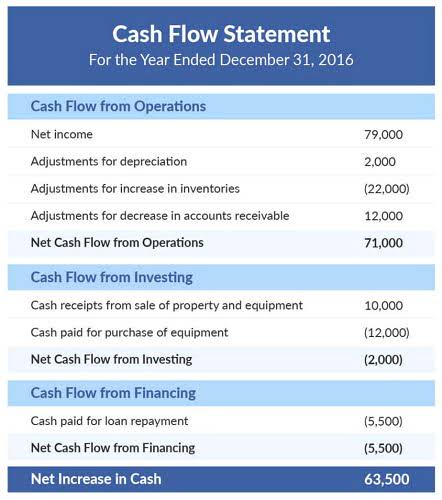
Summary: Cash Flow from Operations
The order mirrors liquidity risk—from immediate obligations to those due later—allowing analysts to assess the company’s short-term financial resilience through ratios like the Current Ratio or Quick Ratio. The order of liquidity directly impacts a company’s financial health by influencing its ability to manage liquidity needs, withstand market shocks, and maintain operational stability. Other assets encompass a broad category of non-current and non-liquid assets not explicitly classified elsewhere, contributing to an entity’s overall asset liquidity profile.
Recap and Final Thoughts Order of Liquidity of Current Assets
Arranging assets and liabilities in the order of liquidity provides useful information about a company’s short-term financial health and its ability to meet its short-term obligations. Stocks, bonds, and exchange traded funds (ETFs) are examples of marketable securities with a high degree of liquidity. They can be sold easily and it usually takes just a few days to receive the cash from their sale. However, selling on short notice might mean selling them for less than what you bought them for – like selling stocks at a lower value when the market is down. Order of liquidity refers to the hierarchy of assets based on how easily they can be converted into cash.
- Liquidity pools and AMMs emerged as an alternative that trades off price precision for constant liquidity.
- Similar to business applications, liquid assets in personal finance are utilized to meet financial obligations as soon as possible.
- While these assets may not be easily converted into cash, they still hold value and play a crucial role in the financial stability of a company.
- Uniswap is an Ethereum-based DEX protocol that popularized the automated market maker model.
- Liquidity considerations play a crucial role in determining how quickly an investment can be converted into cash without significantly impacting its value.
- The order of liquidity is important because it gives investors an idea of how easy it will be for a company to have cash generation capability in order to meet its financial obligations through financial reports.
Key Partnerships Highlight FIGR’s Central Role in Next-Gen Asset Liquidity
- Finally, their presence directly improves the company’s ability to seek additional financing.
- From cash and cash equivalents to intangible assets and goodwill, we will break down the hierarchy of liquidity and discuss how it can impact a company’s financial health.
- The order is important because it reflects which assets you are going to use in order to pay liabilities.
- For traders and liquidity providers, SushiSwap often offered attractive rewards (especially early on via high SUSHI emissions) and a similar experience to Uniswap.
- Understanding and managing liquidity risks is essential for optimizing financial performance and mitigating unexpected market fluctuations.
- Liquid assets are also assets that can be quickly converted into cash, but without losing significant value in the process.
- Upgrading to a paid membership gives you access to our extensive collection of plug-and-play Templates designed to power your performance—as well as CFI’s full course catalog and accredited Certification Programs.
A discussion of liquid asset meaning is incomplete without mentioning its role in financial reporting. Liquid assets are by rule recorded on a company’s balance sheets under the current assets account. In fact, the balance sheet lists assets in order of how liquid they Retained Earnings on Balance Sheet are, starting with those with the highest liquidity (cash).
- Marketable securities are assets that can be easily converted into cash as they have high marketability and are considered short-term investments.
- Once the business is up and running and has a healthy cash fund to weather unexpected expenses and sudden crises, then it can start thinking beyond liquid assets.
- His expertise lies in technical analysis, particularly in dissecting indicators that shape market trends.
- It is a list of a company’s assets showing how quickly they can convert those assets to cash.
- This term refers to the sequence in which assets and liabilities of a company are placed on a balance sheet, from the most liquid to the least.
- Understanding the order of liquidity is important for both investors and business owners because it informs them about the company’s financial stability.
- Following immediately are Marketable Securities, such as short-term investments in publicly traded stocks or bonds that can be quickly liquidated on an exchange.
Accounting for Defined Benefit Plans
In accounting and financial analysis, a company’s liquidity is a measure of how easily it can meet its short-term financial obligations. Overall, the importance of liquidity extends beyond its immediate impact on trading activities and investment decisions. It permeates the core of financial markets, influencing market integrity, risk management practices, and the overall resilience of the financial system.

Although there is no direct measure of the liquidity of each asset, businesses and market analysts use various financial ratios, such as the quick ratio and cash ratio, to identify the overall level of liquidity of a company. The next most liquid assets are short-term investments, followed by accounts receivable and Inventory. One way to measure a firm’s ability to meet its short-term obligations with its liquid assets.
In the Cosmos vision of many sovereign chains, Osmosis provides a neutral ground where assets from different chains can be traded trustlessly. It has been pivotal in bootstrapping liquidity for new Cosmos projects; when a new zone launches its token, listing it on Osmosis is the typical route to price discovery and liquidity. So Osmosis plays a role analogous to Uniswap/PancakeSwap in their ecosystems, but spanning multiple blockchains rather than one. Liquidity pools are capital provided by users, known as liquidity providers (LPs), who deposit tokens into the pool in exchange for a share of trading fees.

On the other hand, marketable securities, while still relatively liquid, may take some time to convert into cash depending on market conditions. Accounts receivable, although representing money owed to a company by its customers, are considered less liquid than cash and marketable securities due to the time it takes to collect and convert them into cash. Understanding the order of liquidity helps individuals and businesses make informed decisions about asset management and cash flow planning. Furthermore, liquidity is a crucial consideration for investors, as it directly impacts the ease of entering or exiting positions in the market. Assets that are highly liquid offer flexibility and enable investors to swiftly adjust their portfolios based on changing market conditions or investment objectives.
- Proper classification of prepaid expenses allows businesses to accurately assess their short-term financial obligations and effectively manage cash flow.
- It permeates the core of financial markets, influencing market integrity, risk management practices, and the overall resilience of the financial system.
- If successful, this initiative could set a precedent for how fintechs, legacy brands, and blockchain players collaborate to reshape asset markets for both institutional and individual investors.
- Sometimes inventory can be sold quickly, so its position may vary from organization to organization.
- In some jurisdictions, entities also report Other Comprehensive Income (OCI) within equity, representing unrealized gains or losses on revaluation of financial instruments or foreign currency translation adjustments.
- These assets can be easily converted into cash without significant loss of value.
The partnership leverages tZERO’s regulatory strength and Figure’s tech, with a mission to help homeowners unlock trapped equity and asset holders access flexible capital. Notably, AI integration by ShyftLabs promises to streamline asset analysis and order of liquidity of assets workflows, fortifying transparency while maintaining regulatory compliance. There is also operational risk in using DeFi platforms (technical glitches, hacks). If needed, consult with financial professionals, especially if you’re risking a significant portion of your capital.